Holy Island Coastguard
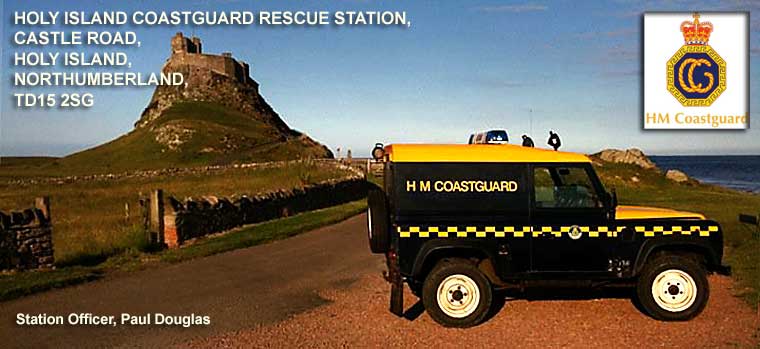
Holy Island Coastguard Search and Rescue group are a team of 8 members, who are on call 24 hours a day, 365 days a year.
In the event of a coastal emergency dial 999 and ask for the Coastguard.
What we do
- Searching for missing persons,
- Guiding other rescue resources onto a casualty's position. (i.e. RAF search and rescue helicopter)
- Manning of helicopter landing site
- Setting up and manning of helicopter emergency landing sites.
- Advising the public on dangers they may come across on or near the coast.
- Provide communications links for other services.
- Assisting other services to complete their task. (Ambulance/Police)
- Any other tasks we are asked to complete.
- Any of the above tasks may be undertaken at any time of the day or night, in all weather conditions.
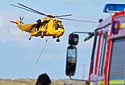
- If the causeway is closes and there is a medical emergency on the Island the Coastguard will co-ordinate the evacuation of that person. Coastguard Rescue Officers from Holy Island would be sent to patient to give medical assistance until a paramedic or doctor could be transported to the Island either by RAF Rescue Helicopter or Lifeboat. Holy Island Coastguard would also set up the landing site for the Helicopter or they would man the pier for the Lifeboat coming in.

Tides and Waves
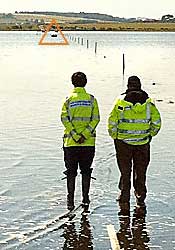
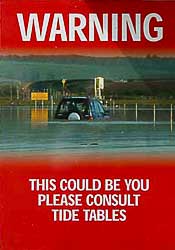
Don't get cut off by the tide. Always check the tide times for the beach you are visiting before you leave.
Waves: If you're paddling, swimming or boarding here is more information on waves to help you decide whether to go out or stay ashore.
Surge Wave: Surging waves do not break and can easily knock someone over, dragging them out to sea. Particularly on from the shore, sea defences, harbour walls, rocks, jetties, etc.
Spill Wave: Spilling waves are when the top of the wave falls down the front of itself. This is generally the safest waves to swim in.
Dumping Waves: Dumping waves are very powerful and occur in shallow water, normally at low tide. Avoid going into the sea when you see dumping waves.
Don't get cut off by the tide. Always check the tide times for the beach you are visiting before you leave.
Waves: If you're paddling, swimming or boarding here is more information on waves to help you decide whether to go out or stay ashore.
Surge Wave: Surging waves do not break and can easily knock someone over, dragging them out to sea. Particularly on from the shore, sea defences, harbour walls, rocks, jetties, etc.
Spill Wave: Spilling waves are when the top of the wave falls down the front of itself. This is generally the safest waves to swim in.
Dumping Waves: Dumping waves are very powerful and occur in shallow water, normally at low tide. Avoid going into the sea when you see dumping waves.
Weather
The weather - and why it's a hazard:
You can easily be caught out with the wrong type of equipment or gear if the weather changes suddenly. A forecast is even more important if you're going to be going out on the water.
Always check the weather before you head out on a trip to the coast. A wide range of weather forecasts is available at both the BBC Weather or Met Office websites.
If you're unsure about the weather conditions or have questions about safety on your local beach you can also contact your local Coastguard Station.
CHECK TIDE TIMES WHEN VISITING THE COAST.
THE PILGRIMS WAY: If you are planning on walking the pilgrims way (across the sand beds) contact Holy Island Coastguard if your unsure of the tide and weather.
The weather - and why it's a hazard:
You can easily be caught out with the wrong type of equipment or gear if the weather changes suddenly. A forecast is even more important if you're going to be going out on the water.
Always check the weather before you head out on a trip to the coast. A wide range of weather forecasts is available at both the BBC Weather or Met Office websites.
If you're unsure about the weather conditions or have questions about safety on your local beach you can also contact your local Coastguard Station.
CHECK TIDE TIMES WHEN VISITING THE COAST.
THE PILGRIMS WAY: If you are planning on walking the pilgrims way (across the sand beds) contact Holy Island Coastguard if your unsure of the tide and weather.
Contact
Holy Island Coastguard
Emergency Number: 999 and ask for Coastguard
Routine Number: 01262 672317
ryan.douglas@mcga.gov.uk